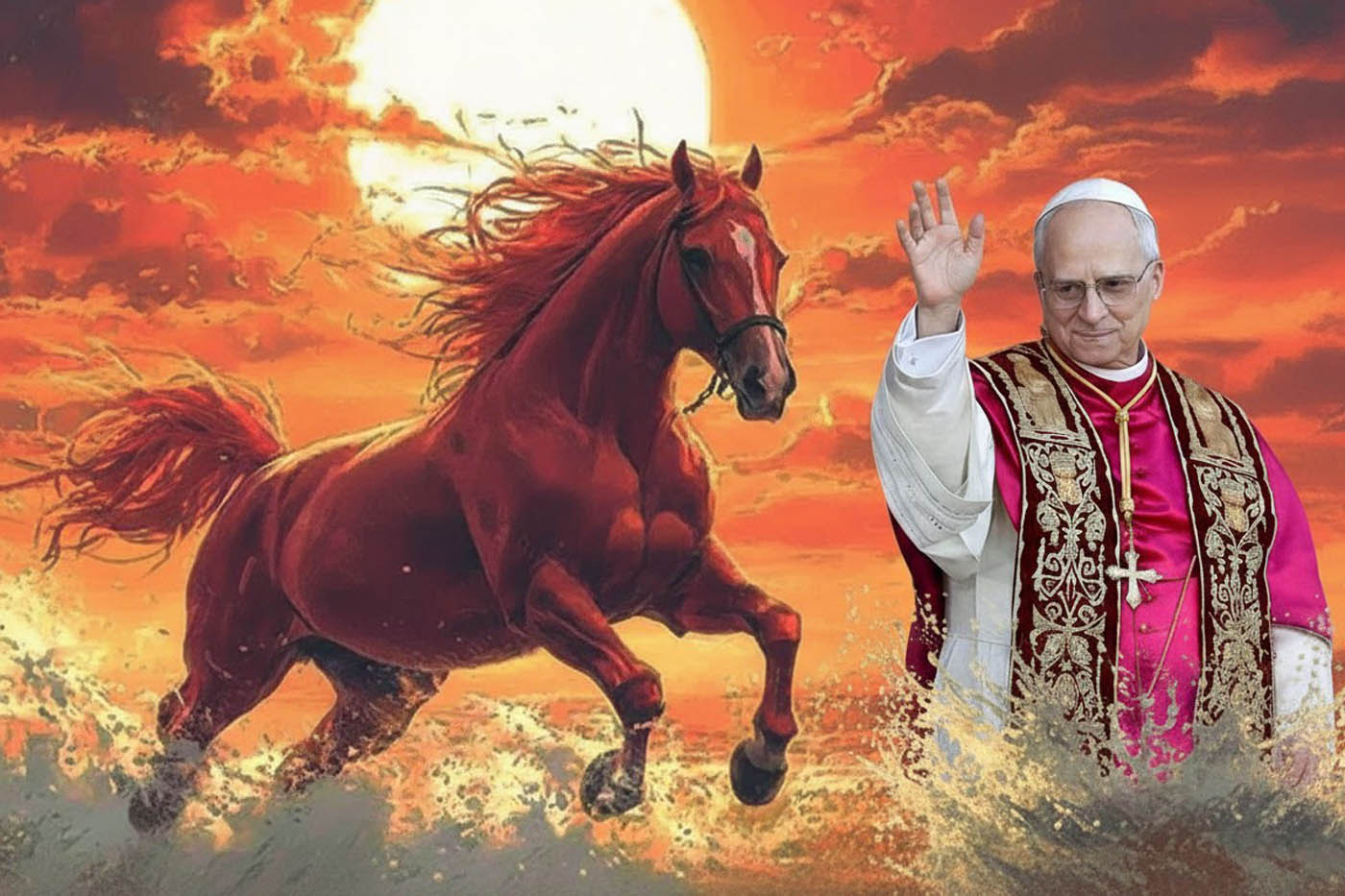
Pope Leo XIV and the Fire Horse Year
Holy Momentum or Holy Noise: How the Church Can Move Faster Without Losing Its Soul
The Year of the Fire Horse begins on 17 February 2026. It arrives in the same late-winter hinge as Shrovetide, when the Church rehearses release and restraint — an apt counterpoint to the Fire Horse’s promise of speed. For many people, “Fire Horse” is shorthand for a year of acceleration — heat, momentum, appetite, risk. Taken literally, it can become superstition. Taken seriously, it becomes something more useful: a cultural symbol for the defining condition of modern life — speed without wisdom.
Pope Leo XIV stepped into the papacy with a word that, in this climate, is either naïve or revolutionary: peace— described as “unarmed and disarming… humble and persevering.” In the same early window of his pontificate, he made an unusually explicit connection between his chosen name and the rise of artificial intelligence — framing AI as a “new industrial revolution” that threatens human dignity, justice, and labour.
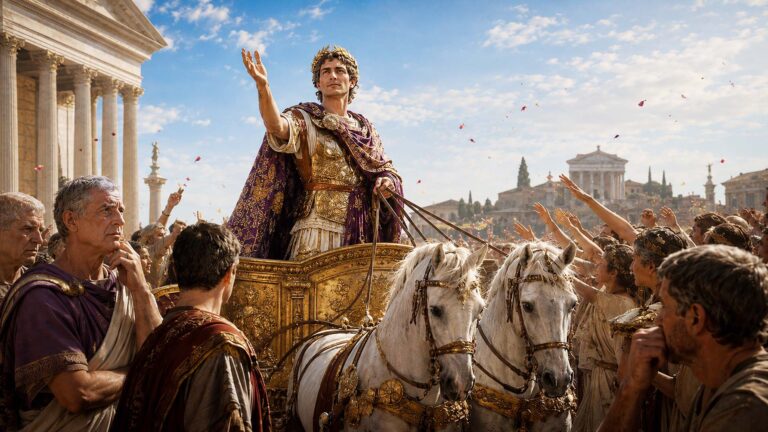
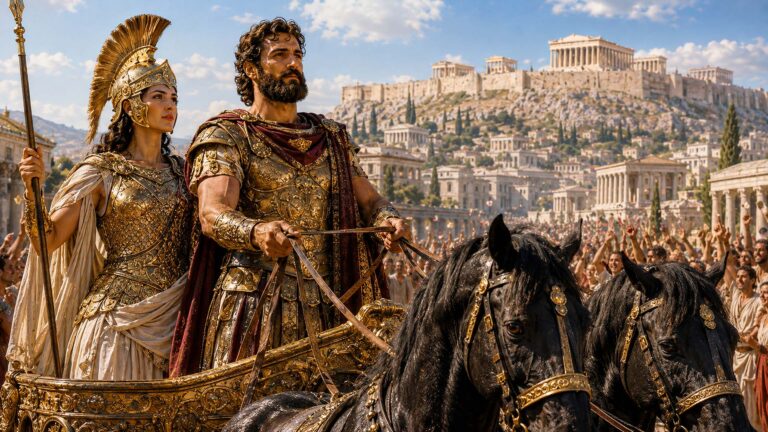
That combination — peace as stance, AI as social question — already sketches a leadership agenda. And it intersects, almost too neatly, with the Fire Horse metaphor: a powerful animal that can carry a rider into the future, or throw the rider into chaos. The difference is not the horse. It is the reins.
This is where a controversy becomes unavoidable:
The Church is being forced to become faster — without becoming shallow.
And many within the Church will resist that, not because they love depth, but because they’ve learned to confuse slowness with fidelity.
The Fire Horse problem is not “more energy.” It’s governance
Every culture has an image for the same human dilemma: power that outruns character. The horse symbolizes movement: mission, expansion, public life, travel, initiative. Fire symbolizes intensity: illumination, purification, zeal — and the danger of becoming combustible.
In 2026, the Church does not need a horoscope. It needs a strategy for acceleration:
- Information moves faster than formation.
- Outrage spreads faster than truth.
- Technology changes faster than ethics.
- Identity politics hardens faster than dialogue.
The Church’s temptation is to respond in one of two dysfunctional ways:
- Retreat into “purity” (a defensive tightening that produces ever smaller enclaves), or
- Chase “relevance” (a performative speed that produces slogans rather than conversion).
Both are ways of being thrown by the horse.
If the Fire Horse year means anything that can be used profitably, it means this: the season rewards direction and punishes frenzy.
Leo XIV’s opening move: peace, but not as softness
The first public words of a pontificate are not trivial. They establish atmosphere. Leo XIV’s first address framed peace not as sentimental calm but as a specifically Christian strength—rooted in the Risen Christ, “unarmed and disarming,” persistent rather than performative.
That is already a provocation.
Because in today’s media ecology, “peace” is often treated as weakness, compromise, or naïveté. Conflict sells. Polarization recruits. Moral grandstanding generates clicks and donations. Even within Catholic subcultures, a significant amount of energy now flows through a conflict economy — liturgy as weapon, doctrine as club, bishops as mascots, scandals as fuel.
A pope who leads with “peace” implicitly threatens that entire economy.
And that creates the controversy: a pontificate oriented toward peace will not only confront the world’s violence; it will also confront the Church’s addictions.
Why “Leo” matters: the social question returns—now with AI
Leo XIV has tied his name choice to Leo XIII and Rerum Novarum, and explicitly linked that legacy to the upheavals of AI and a “new industrial revolution.”
This is more than symbolism. It is a technical pivot.
Rerum Novarum addressed a world in which industrial systems were turning people into instruments — labour as commodity, workers as disposable, families as collateral damage. Leo XIV is suggesting that AI risks producing an updated version of the same sin: human beings reduced to data, behavior manipulated at scale, work displaced without moral responsibility, truth destabilized, and “efficiency” treated as the highest good.
He has also supported calls for education and formation in media and AI literacy, precisely as a matter of protecting human identity and building a responsible culture of communication.
That move — placing digital literacy inside a moral and pastoral framework — could become one of the most important practical contributions of his pontificate, if it’s implemented beyond speeches.
Here’s the controversial but intellectually grounded claim:
Catholic social teaching is about to become either mainstream again — or irrelevant. Because the “social question” is no longer a side topic. It’s the operating system of daily life.
The Church’s real needs in 2026: unity, credibility, formation, and a workable mission
A Fire Horse year, understood as acceleration, presses on the Church’s deepest needs — not abstractly, but structurally.
Unity without uniformity (and the end of tribal Catholicism)
Leo XIV has spoken repeatedly about bridge-building, dialogue, a synodal Church that “walks together,” and a posture of closeness—especially to those who suffer.
The need here is technical: not “be nicer,” but stop designing parish and media ecosystems that reward factional identity.
A slightly sharper, but fair, diagnosis:
- Some Catholics now behave as if Catholicism is primarily a political identity with sacramental accessories.
- Others behave as if Catholicism is primarily an inner spirituality with social consequences politely ignored.
Neither produces saints. Both produce consumers.
Unity in 2026 will require something more disciplined: shared practices, shared language of charity, and structures that reduce the incentives for intra-Catholic warfare.
Credibility through coherence (not PR)
In an age of instantaneous scandal amplification, credibility is no longer protected by institutional silence. The Church’s credibility problem is not merely external distrust; it is internal fragmentation — people living as if the Gospel were a brand message rather than a conversion.
A Fire Horse environment punishes incoherence. Faster communication exposes hypocrisy faster.
The need is not “better messaging.” The need is visible coherence at the level of parish life, leadership accountability, and moral seriousness.
Formation that matches the century
Many parish systems still assume a world where culture provides basic Christian categories and the Church adds refinement. That world is gone.
The Church now catechizes people competing against devices designed to monetize distraction. It must form people amid algorithmic persuasion, synthetic media, and social fragmentation.
If the Church does not build serious formation in 2026 — especially for young adults — it will simply become a service-provider for the already convinced.
Where Leo XIV can push—and where he will face resistance
A pope can set direction, but the machinery of implementation is local: bishops, seminaries, parishes, schools, families.
Leo XIV’s agenda — peace, social teaching, AI as moral disruption — will likely meet resistance from at least three directions:
- The “culture war” wing: peace sounds like weakness; social teaching sounds like politics; AI critique sounds like anti-modernism.
- The “managerial” wing: moral urgency threatens institutional comfort; synodality threatens control; reform threatens stability.
- The “spiritual but private” wing: social teaching feels like distraction from personal piety.
And yet the world will not wait for Catholic internal consensus. AI and automation are advancing under market incentives that often ignore the vulnerable, and Leo XIV has positioned the Church as a moral critic of that trajectory.
That stance is already controversial in wider society—he has been reported as challenging the values of Silicon Valley and warning about monopolistic power and manipulation.
Within the Church, the deeper controversy is this:
Will Catholics accept that defending human dignity now includes resisting digital systems that reshape the soul? Or will they treat this as optional commentary while continuing business as usual?
A “Fire Horse” pastoral strategy for 2026 (technical, practical, implementable)
If 2026 is a year of momentum, the Church needs reins. Here are seven that are both spiritually coherent and operationally realistic.
1) Build parish-level “peace discipline”
Peace cannot remain a theme. It must become a practice.
- Train clergy and lay leaders in conflict de-escalation and moral communication.
- Establish norms: no public shaming, no factional bait, no gossip-as-identity.
- Teach peace as a virtue of strength, not passivity.
Leo XIV has made peace central; parishes should operationalize it.
2) Make AI and media literacy part of Christian formation
Not as a tech course — as spiritual hygiene.
- Teach how algorithms exploit attention and outrage.
- Teach discernment: how to verify, slow down, and refuse manipulation.
- Teach the dignity of the human person as the criterion for technology.
This aligns with calls associated with Leo XIV emphasizing media and AI literacy.
3) Renew Catholic social teaching as a lived catechism
Many Catholics can articulate moral teachings on private life but cannot articulate the Church’s coherent teaching on labor, economy, and human dignity under technological change.
Make social teaching normal again:
- preach it
- teach it
- apply it to local work realities
- connect it to prayer, not ideology
Leo XIV’s “Leo XIII framing” makes this a defining opportunity.
4) Rebuild the parish as a community of practice, not an event schedule
A Fire Horse year punishes “religion as occasional consumption.” People need belonging, rhythm, and shared mission.
- small groups with disciplined practice
- shared service that is consistent
- contemplative prayer that is accessible and real
- mentoring across generations
5) Treat the liturgy wars as a pastoral emergency
This is where the “slightly more controversial” truth lands:
If Catholics cannot worship without using worship as a battlefield, they will not evangelize; they will only recruit.
Peace in worship does not mean blandness. It means refusing to turn the altar into a referendum on identity.
6) Evangelization that doesn’t mimic the internet
The Church cannot out-perform influencers. It must offer what the internet cannot: real sacramental life, real community, real mercy, real moral clarity without cruelty.
7) A coherent Church voice against nationalism and exclusion
Leo XIV has criticized the rise of nationalist political movements and warned against prejudice, exclusion, and indifference, calling for reconciliation and dialogue.
This will remain controversial — because many Catholics want the Church to bless their tribe. But the Church cannot become a chaplaincy to exclusion and still claim fidelity to the Gospel.
7) The central wager of the pontificate: can peace govern power?
A Fire Horse year is a useful mirror because it forces the question: what happens when energy rises?
The Church is entering a period when energy will rise — technological disruption, social fragmentation, global conflict, vocational strain, generational disaffiliation, and a profound crisis of attention. Leo XIV has placed two stakes in the ground: peace and human dignity under technological revolution.
The wager is not whether this sounds noble. The wager is whether it can become operational. Because peace is not a sentiment. It is a form of governance. And governance is what decides whether momentum becomes mission — or merely noise.
If 2026 is truly a year of acceleration, then the Church’s task is not to race the world. It is to move with conscience — fast enough to be present, deep enough to remain holy, and disciplined enough not to become possessed by the very forces it claims to critique.
Shrovetide and Lent insist that momentum without purification becomes noise. The Church’s tradition places reins on desire, not to diminish life, but to make it truthful. If the Fire Horse is an image of acceleration, then the liturgical year supplies the counterweight: a discipline of peace strong enough to govern power.
This leads to the Fire Horse challenge at its best: not the thrill of motion, but the dignity of direction.